
A day of wholesome, shameless tourism.
After around four hours’ sleep, I wake feeling suprisingly fresh. My upside-down sleep schedule has reverted back to normal and I can now sleep from around 11pm until around 6am. I feel refreshed and productive.

Breakfast. Instant noodles, mango and strong, black coffee. These particular noodles come quite beaten up in their packet, so I’ve found if you save the little broken bits, mix them with the packet of sprinkles and scatter the mix over the top, the combination of chewy noodles and crunchy fragments elevates the humble dish to an almost Michelin-level standard. The pink stuff is Muối Ớt, a type of chilli salt, which works superbly with fruit. A cardiologist’s nightmare of a breakfast but delicious nonetheless.

I board a tour bus at 8:30am and we head to Chua Linh Ung. The name means ‘Spirit Responding Temple’, and includes a nine-storey pagoda and a colossal statue of the Lady Buddha, the Bodhisattva Quan Am, aka the goddess who ‘Listens to the cries of the World’. She can be seen from any point along Da Nang’s coast, a pure white monolith amidst the deep green backdrop of the mountainous forest. We’ll meet her shortly.


The area is impressive to walk around, with its numerous statues of religious and historical figures, beautifully cultivated plants and stone pillars.
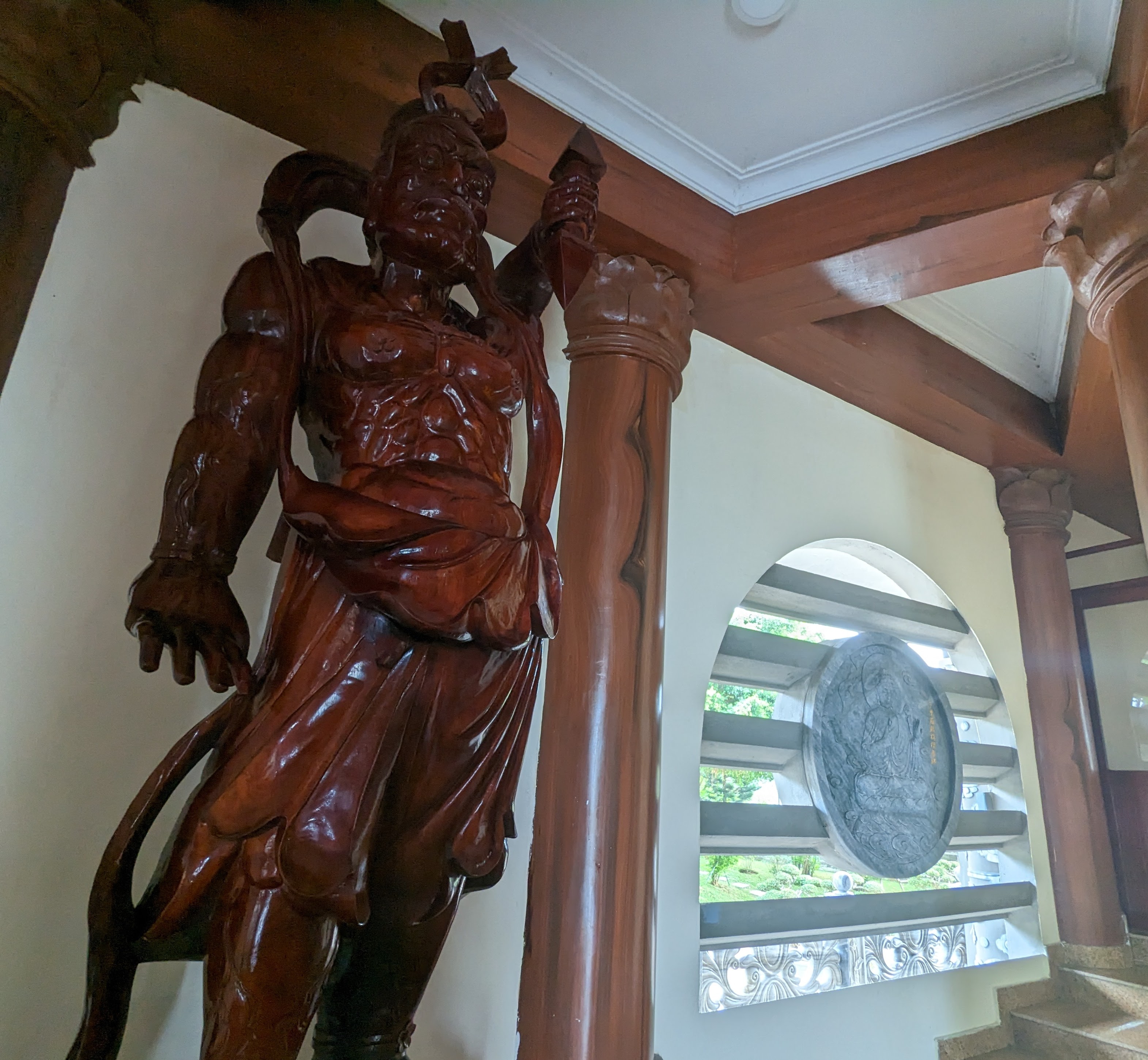
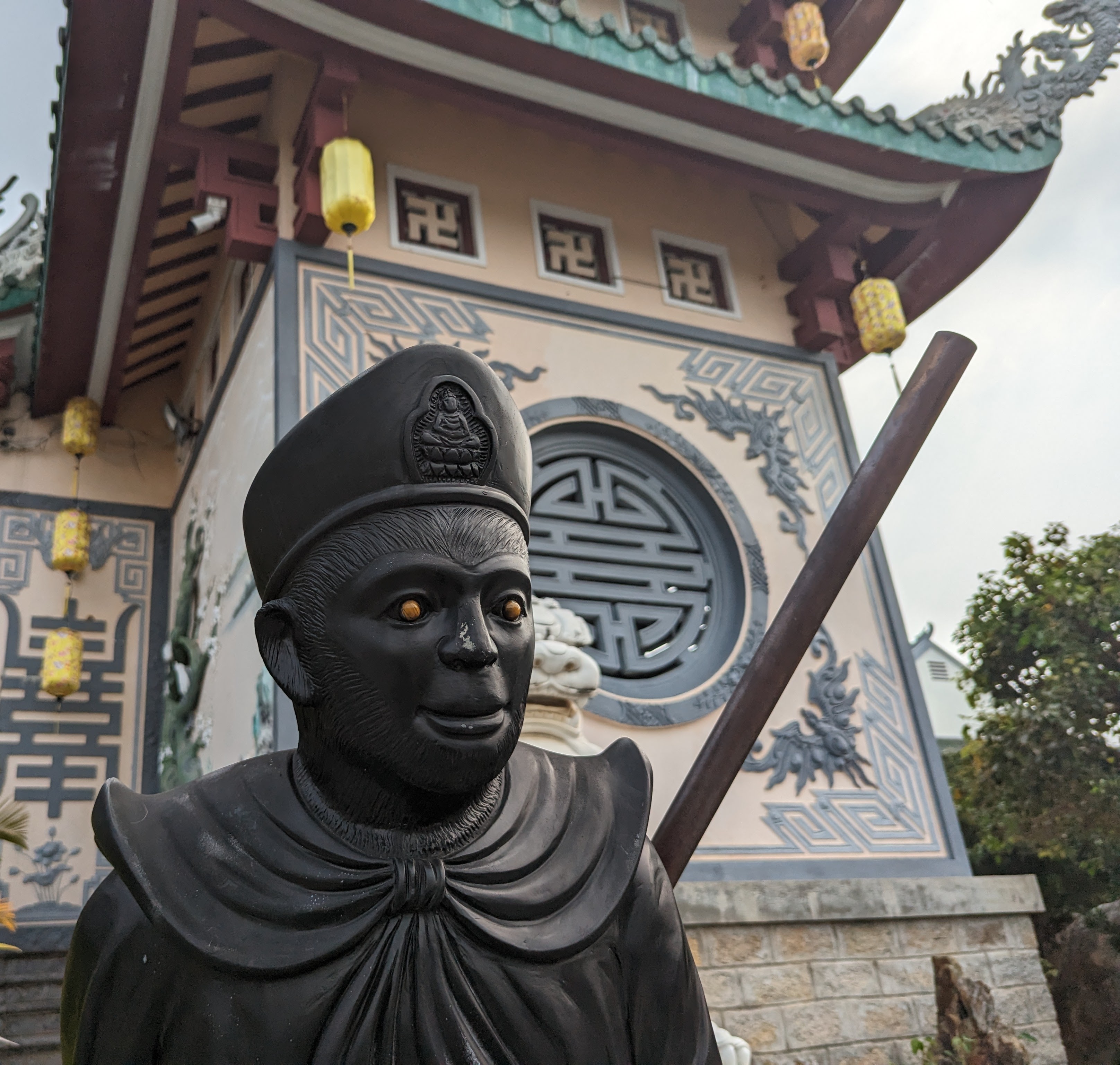
Almost all of the statues are made of white stone. This is the only one I can recall that was made from black stone. With its golden eyes, wooden staff and unusual expression, it’s a stand-out piece in the temple grounds. Many of the statues are guardians designed to protect the holy sites, granting access only to those who have earned it, sorting the moral wheat from the immoral chaff.

There she is. 67 metres, according to our tour guide. Positioned high in the mountains overlooking the coast, she oversees the fishing area to the north east of Da Nang city. This is the area where much of the seafood is caught each day. Sadly, as with many traditional industries, fishing is in decline due to the dangerous nature of the work and the rise in more cost-effective overseas imports. The Lady Buddha blesses the fishermen each day with good luck and prosperity and, one hopes, her blessings work, or the fishermen will eventually have to retrain as tour guides.
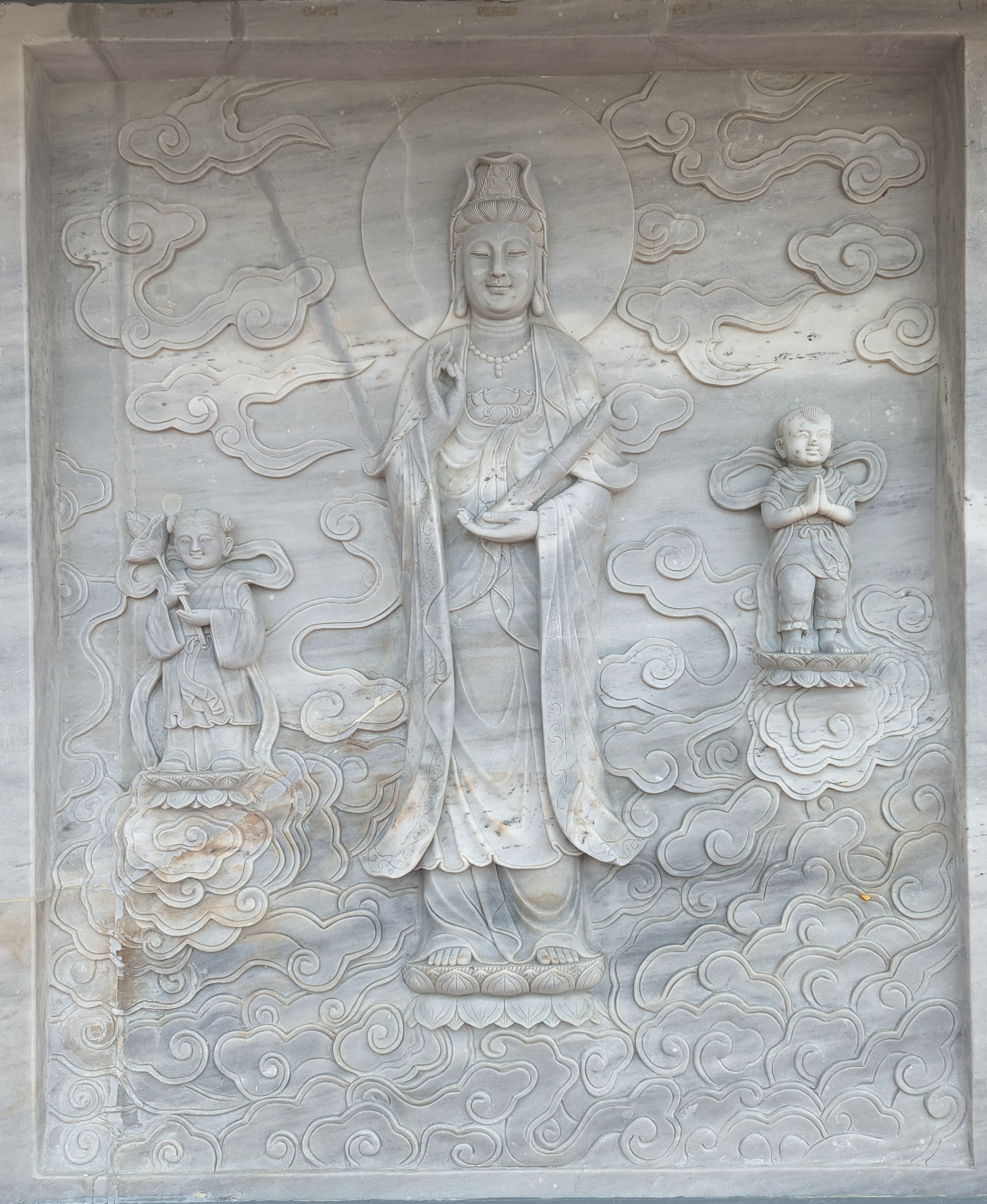
The marble from Marble Mountain is a constant presence. So much marble has been used on this site alone that I am surprised that there is any mountain left. I later discover that the majority of the marble is now imported from China. I especially like the clouds in this relief. There is a beautiful little moth hiding in the carving too.
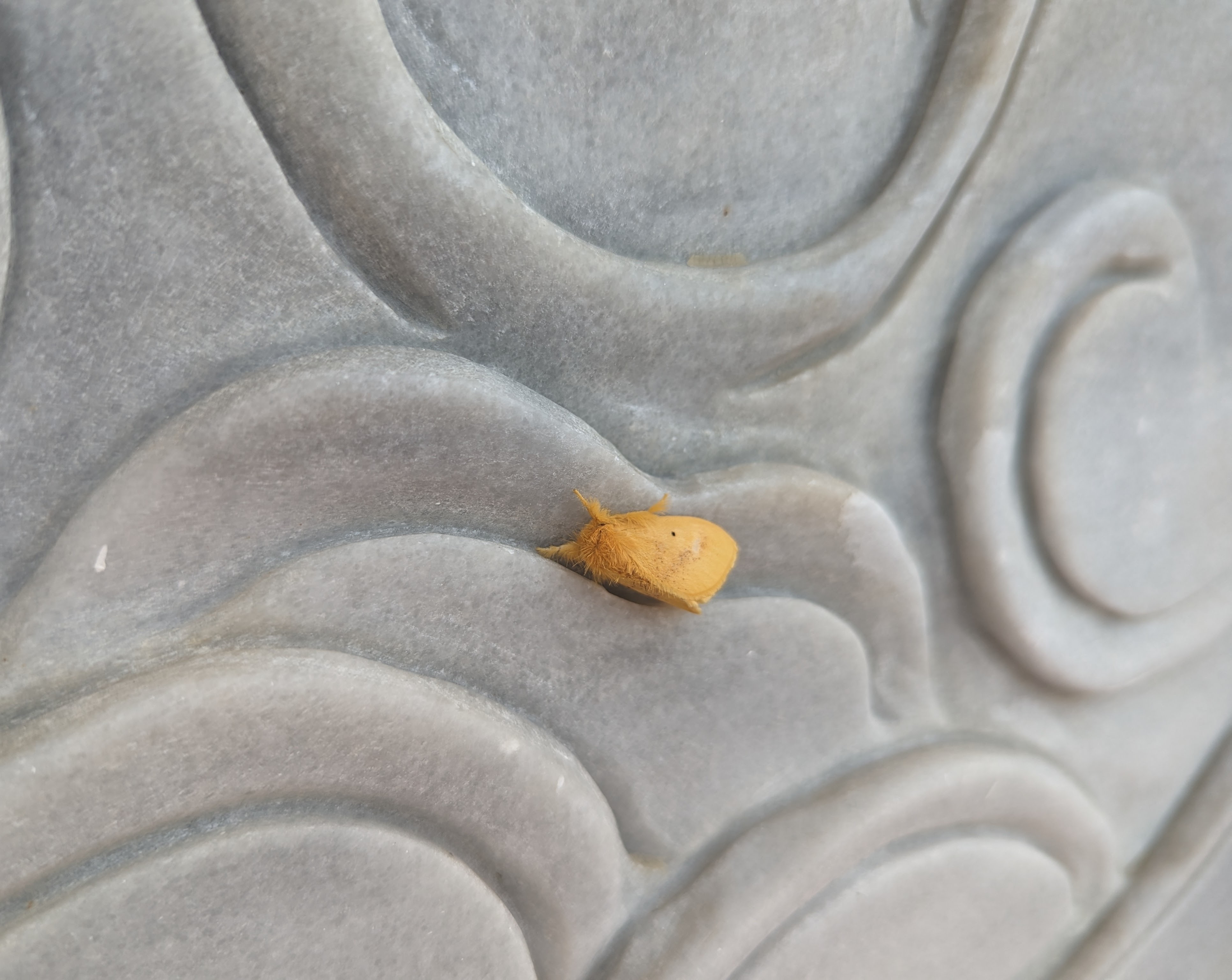
Poor thing. It is roasting hot, full of tourists and barely past 9am. I don’t think it has much chance of making it to dusk.
After some time wandering around and admiring the sights, we board the bus and head along the coast to Non Nuoc Stone Village, the home of stonecraft in the area.

- He’s dead… wrapped in plastic…

The workshop we visit is packed with marble statues. They are impressive in both scale and number. Despite the mass-produced feel, they are fascinating to look at, gods, dragons, scenes from the past as well as abstract, modernist feature pieces. The workshop also has a very large giftshop packed with pocket-sized glass and stone trinkets, which is probably why we spend nearly three quarters of an hour here when fifteen minutes would have been plenty.
After this, we board the bus once more and head to Marble Mountain and the Am Phu cave.
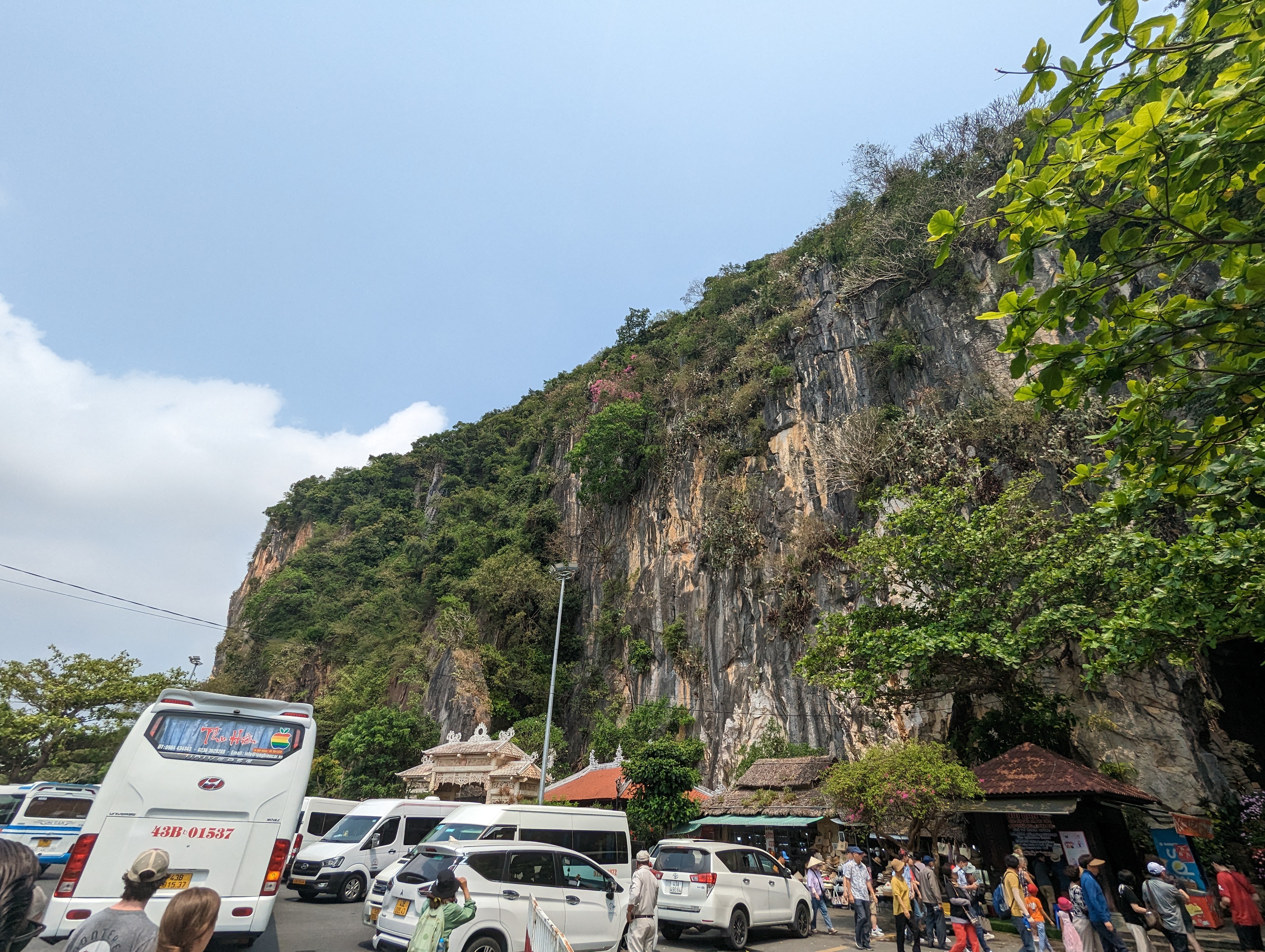
Marble Mountain from the main entrance.
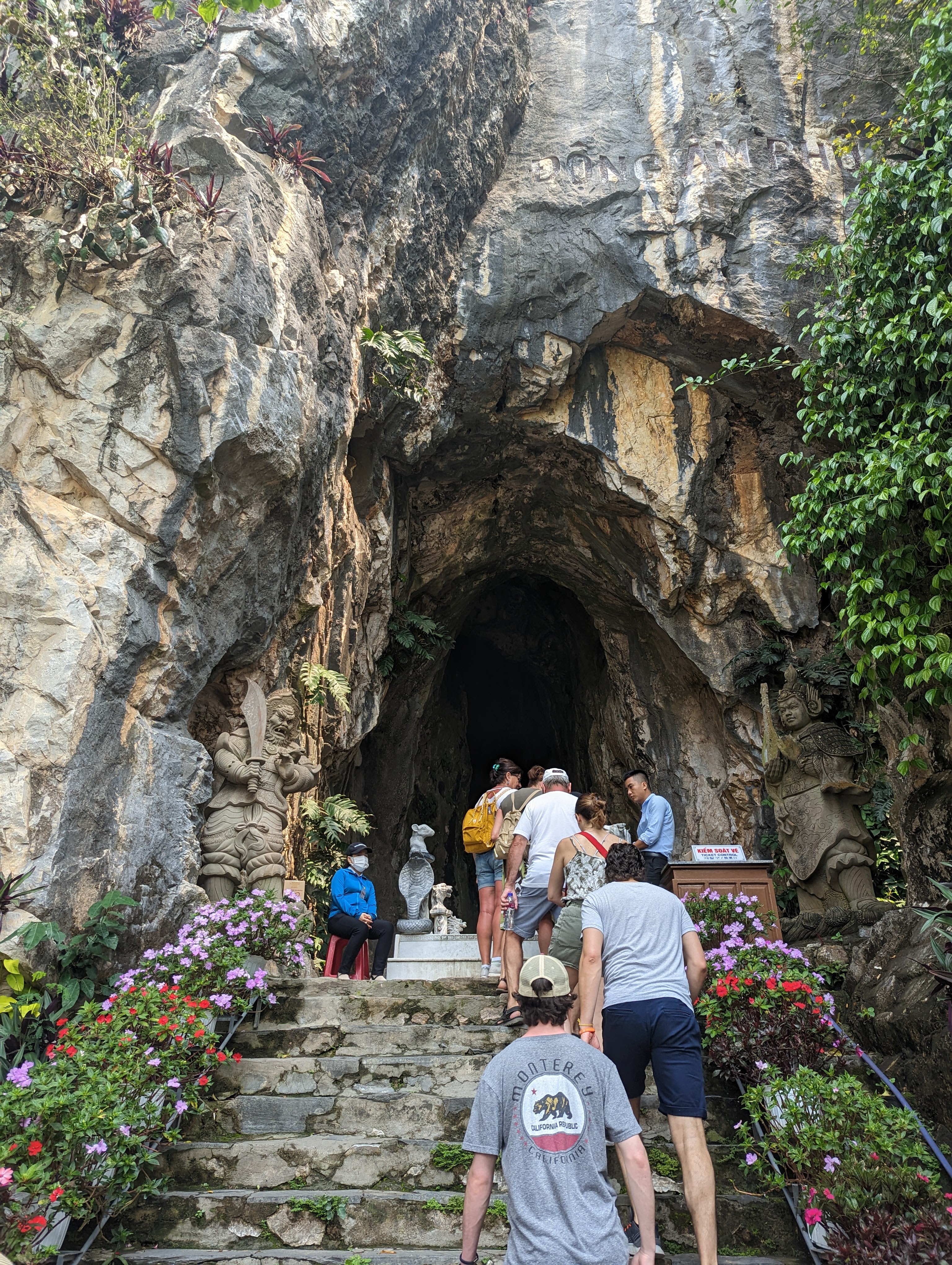
The entrance to Am Phu cave, at the base of Marble Mountain. At this point I become concerned. Have I wandered (read: hobbled) blindly into a day trip of uneven, slippery, precarious and challenging steps and walkways? Would I have to ‘sit this one out’, and join the elders as they rub their aching joints and nurse ice coffees whilst the others galavant youthfully around us? Not quite. There are a couple of challenging sections but nothing too risky, and one staircase that I politely declined because the steep steps were barely a metre across and packed to the proverbial rafters with the shuffling masses.

A marble map.
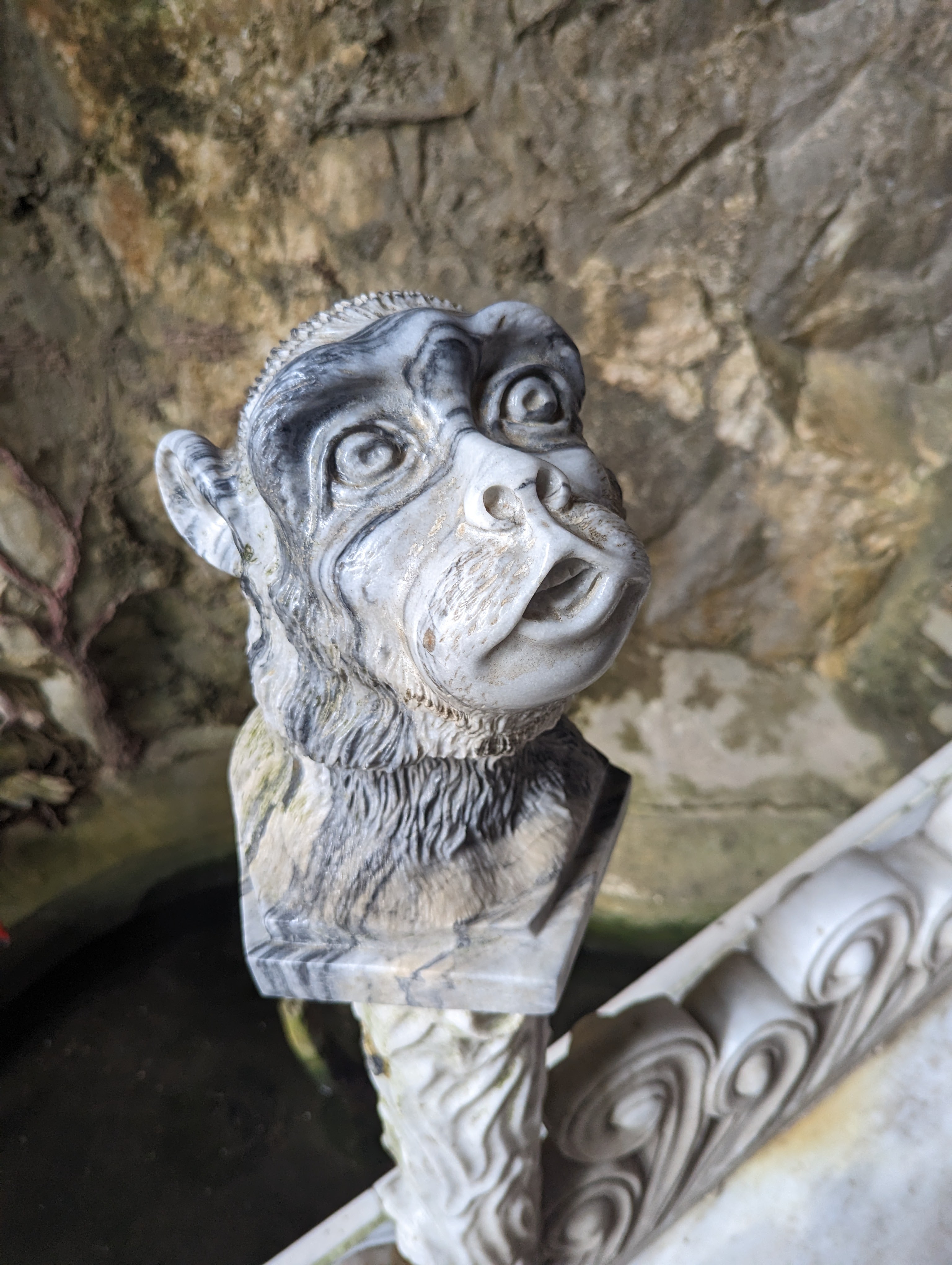
A marble monkey. On entering, you cross a bridge lined with statues of the Chinese zodiac animals. The bridge represents the crossing from the mortal world into the afterlife. Rich with detail, it’s an impressive start to the visit.

‘Am Phu’ means ‘Hell’ and was named by King Minh Mang on its discovery in the 19th century. The red glow around the marblework gives it a mildly hellish atmosphere. Incense hangs heavy in the air. It’s an impressive cave on its own, and the sculptures add to the sense of impending doom.
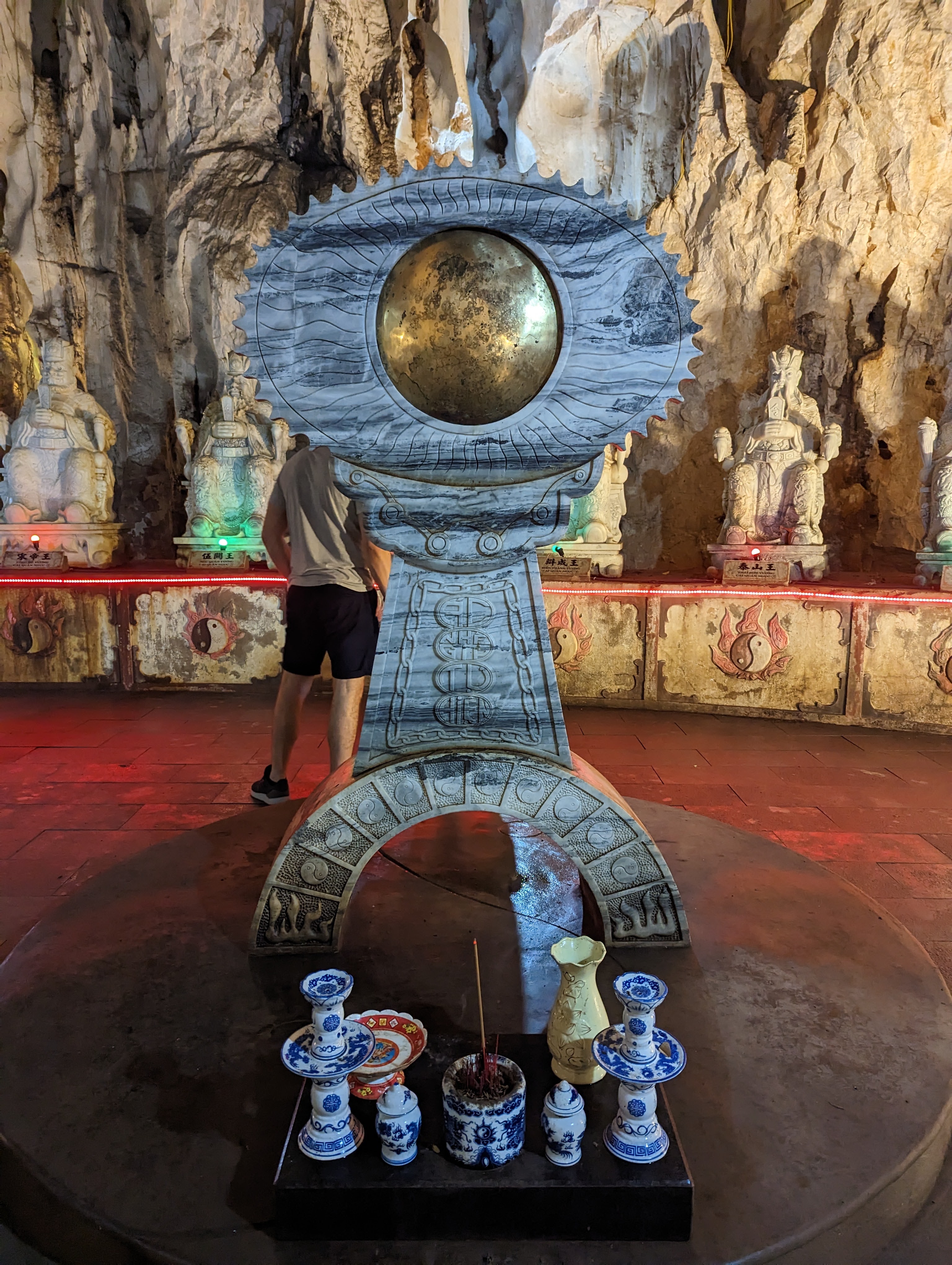
This is one of the challenges that face you as you explore. A mirror that reflects your life back to you. You see all the good and the bad you have done on earth. After this, you are judged whether you are cursed to journey deeper into hell or whether you may ascend the steps to heaven. Fortunately, it was tarnished beyond repair so I managed to escape judgement. Either that, or it’s entirely accurate. I promise myself I will spend some of the weekend engaged in self-reflection and contemplation.
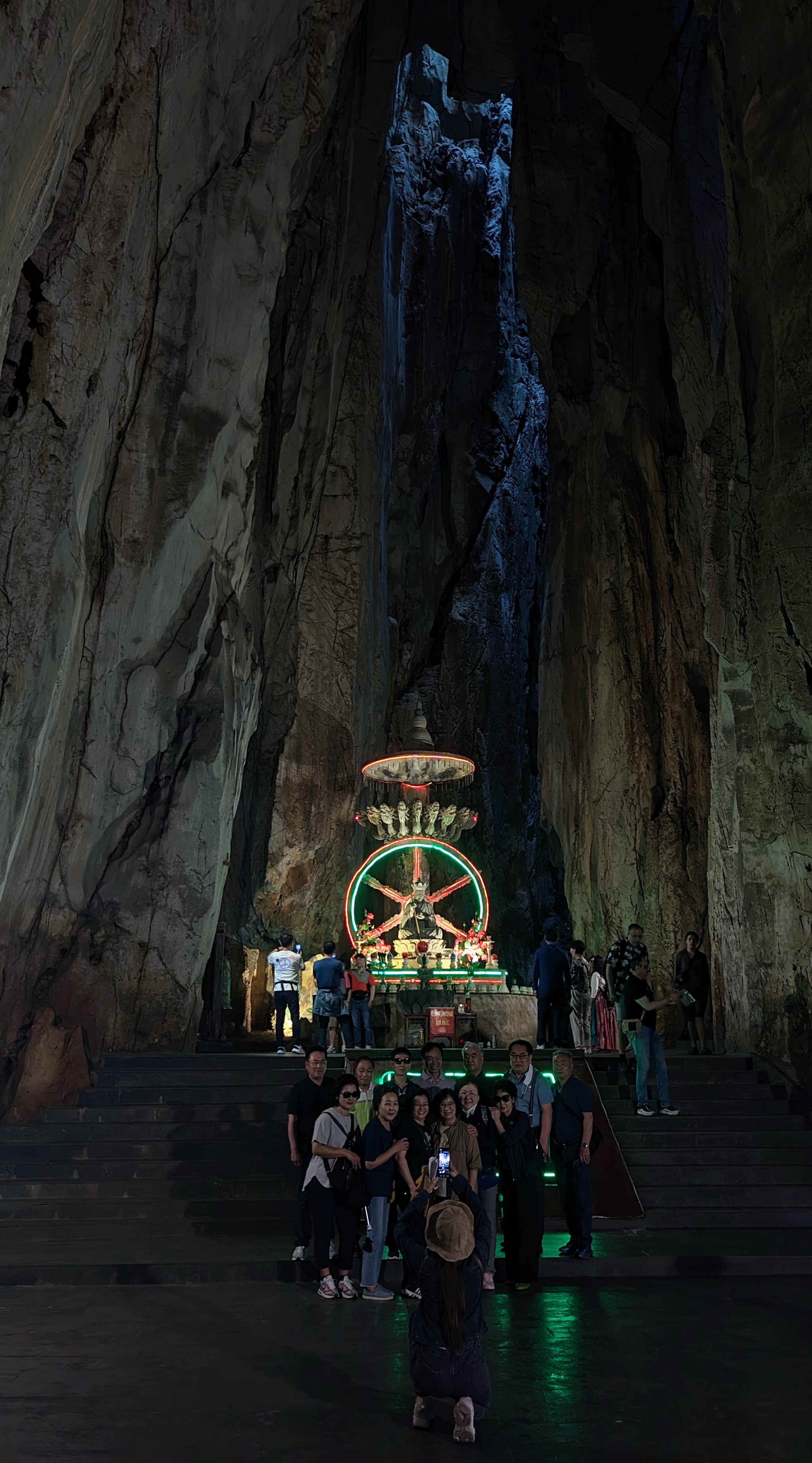
The marble scales that judge you and either permit you to ascend to heaven or condemn you to eternal damnation.
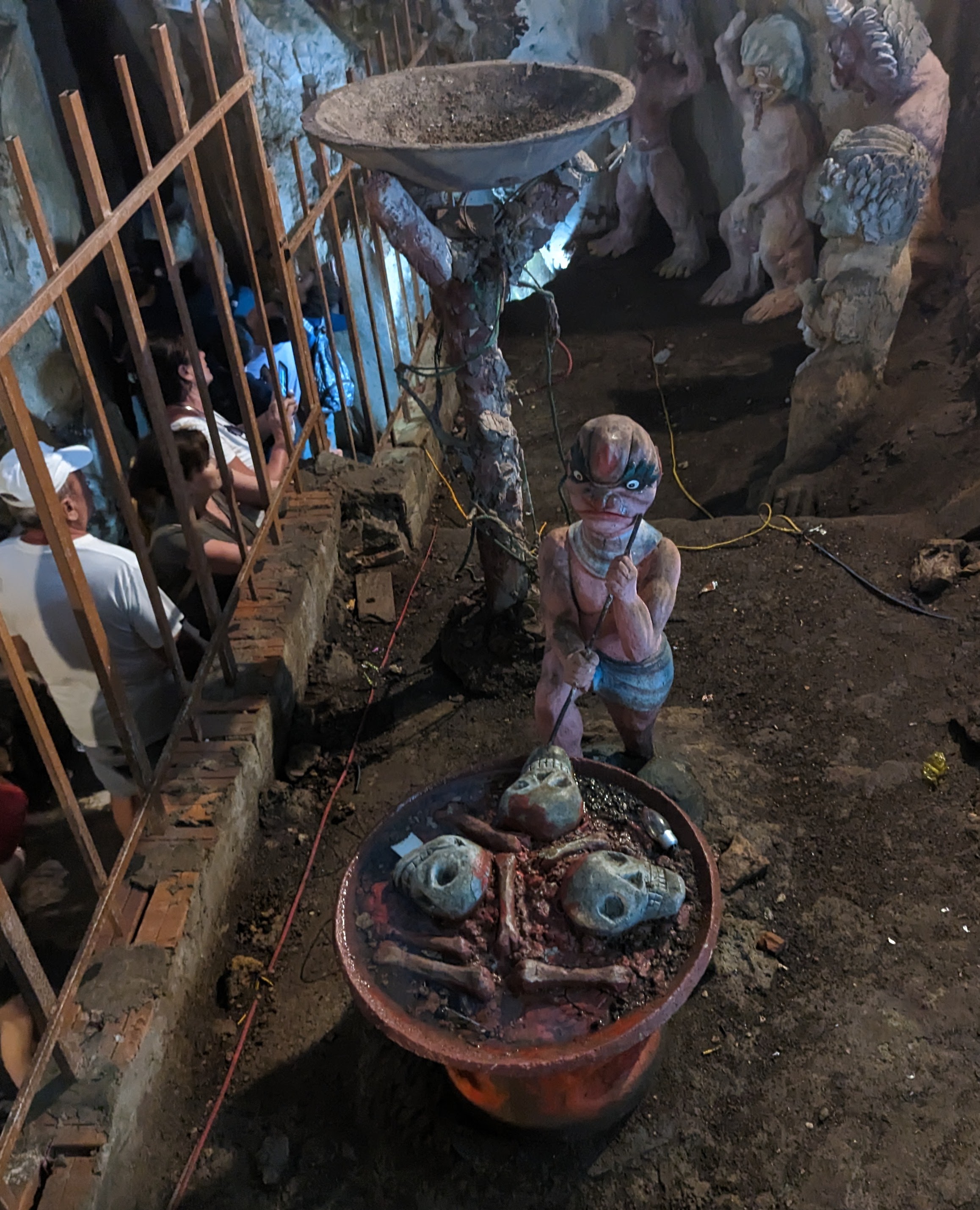
And as you can see, damnation looks pretty damned terrifying.
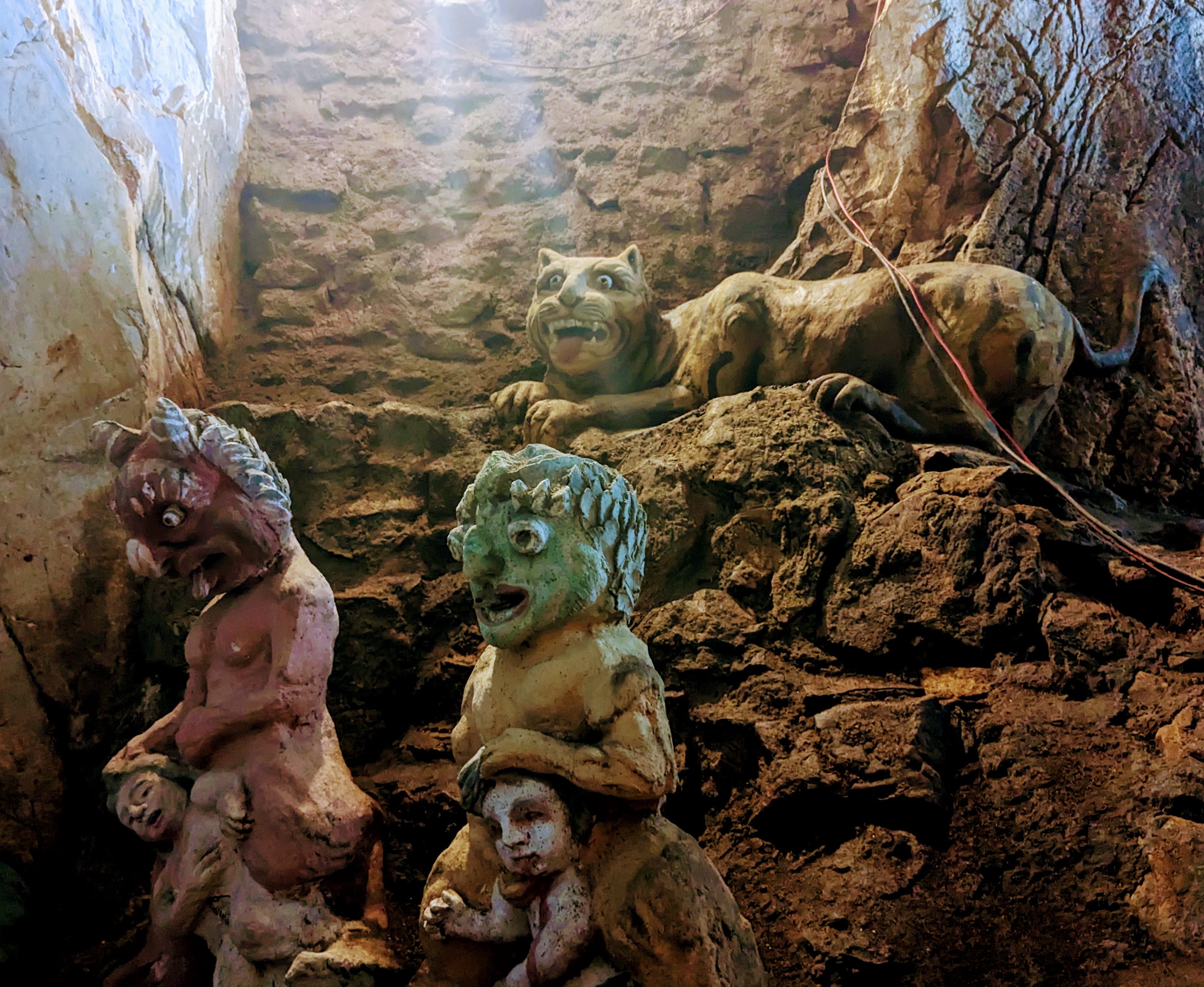


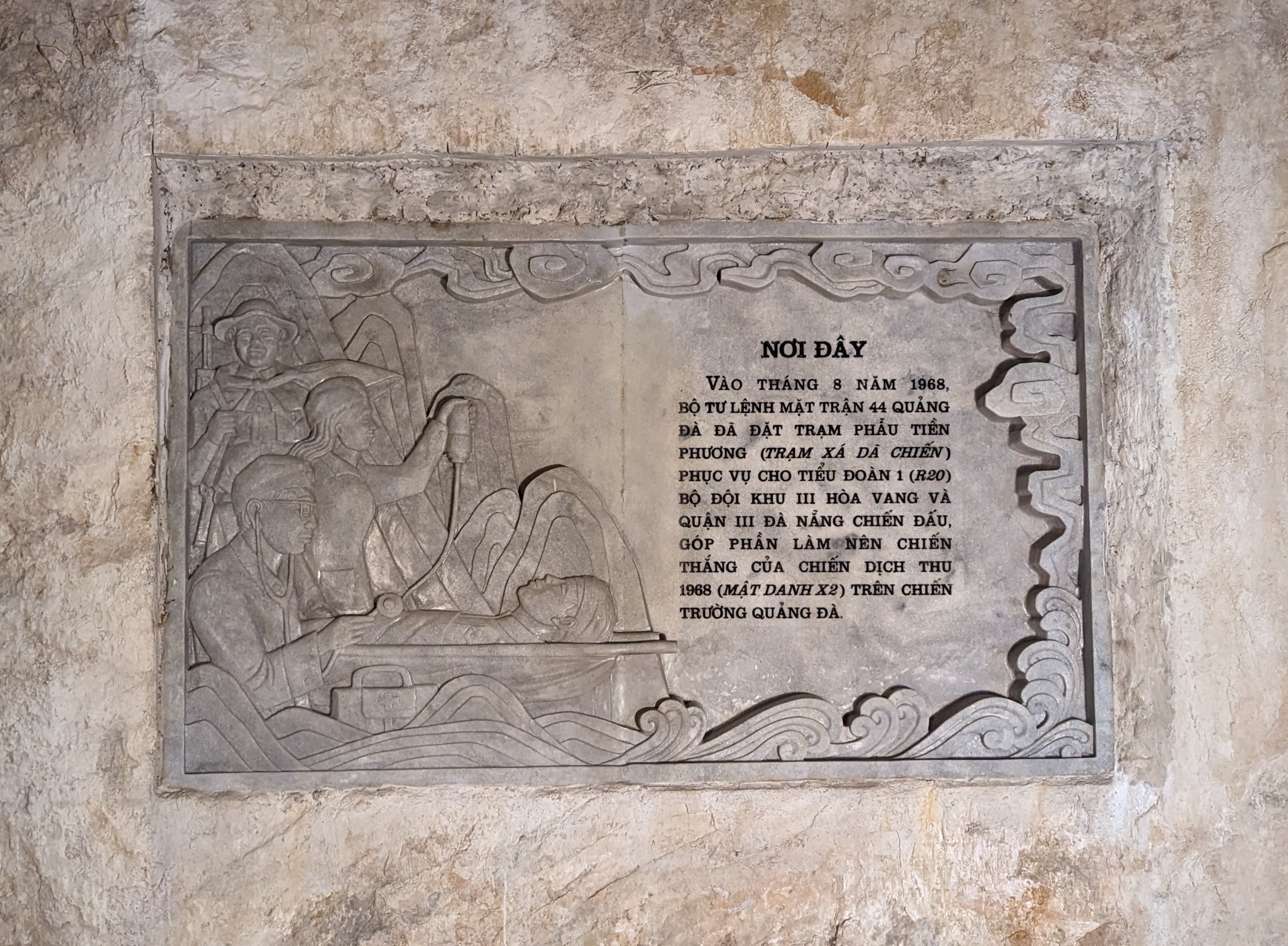
The cave system was used as a military base and field hospital during the war.
We exit Am Phu cave and decide, as a group, to walk the 150-odd steps to the top of the mountain. It is punishingly hot and, despite not being too challenging, I am drenched with sweat by the time we reach the top.
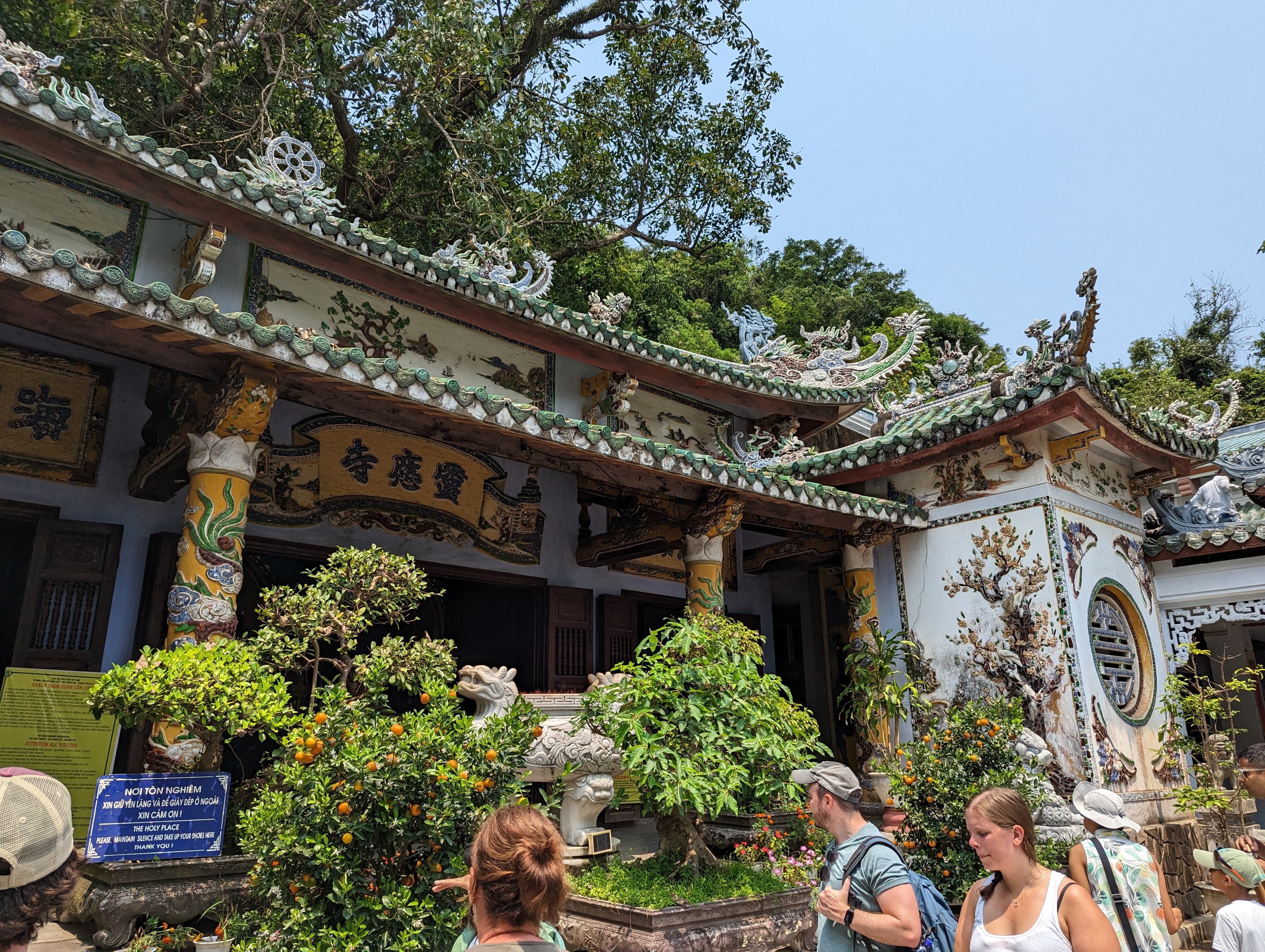
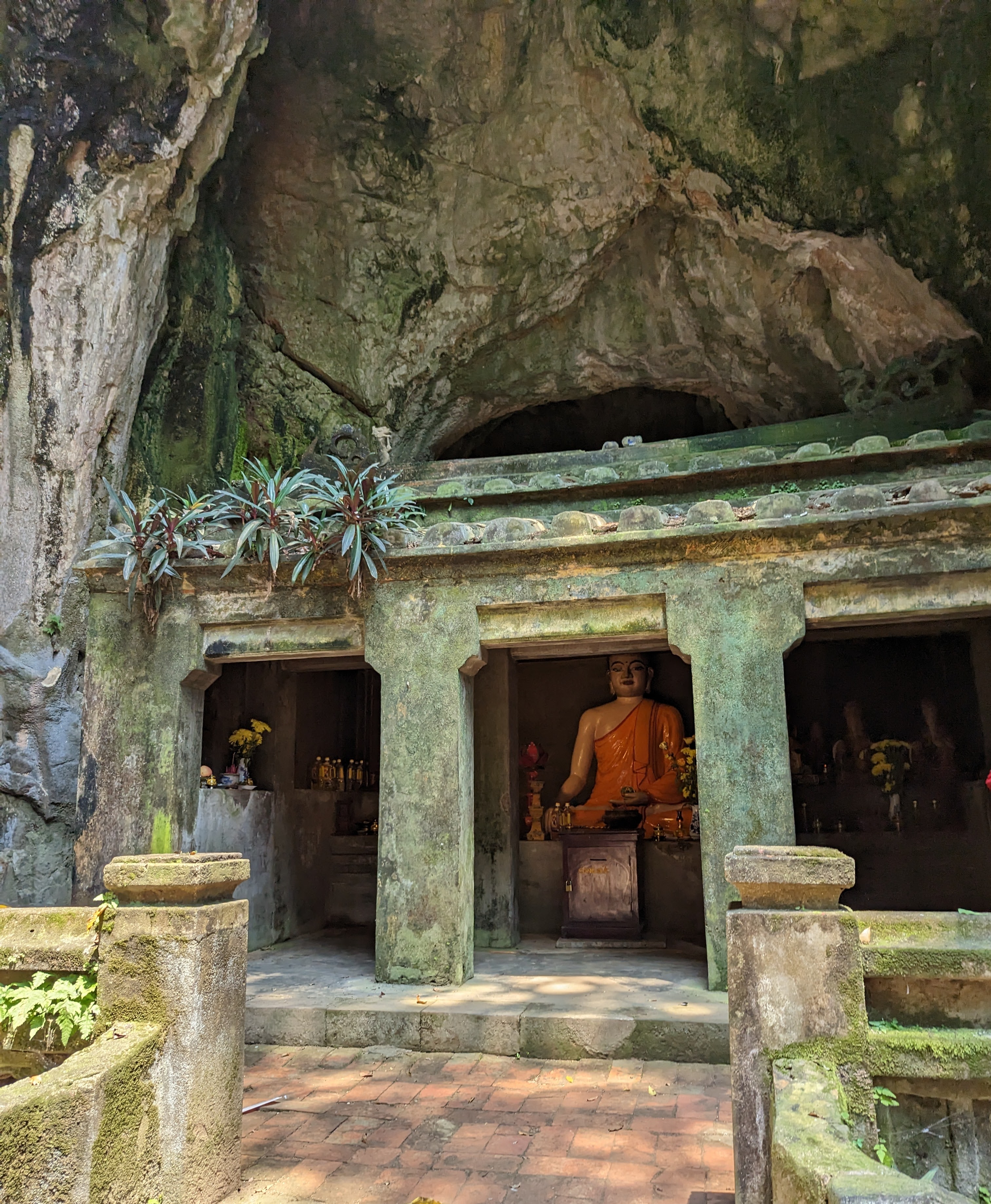



Two guardians to the entrance of one part of the cave. The angry-looking fellow has an axe to deter evildoers, whereas the peaceful looking fellow is more than happy to let you in as long as you’ve managed to avoid upsetting the gods too much at this point in your life.
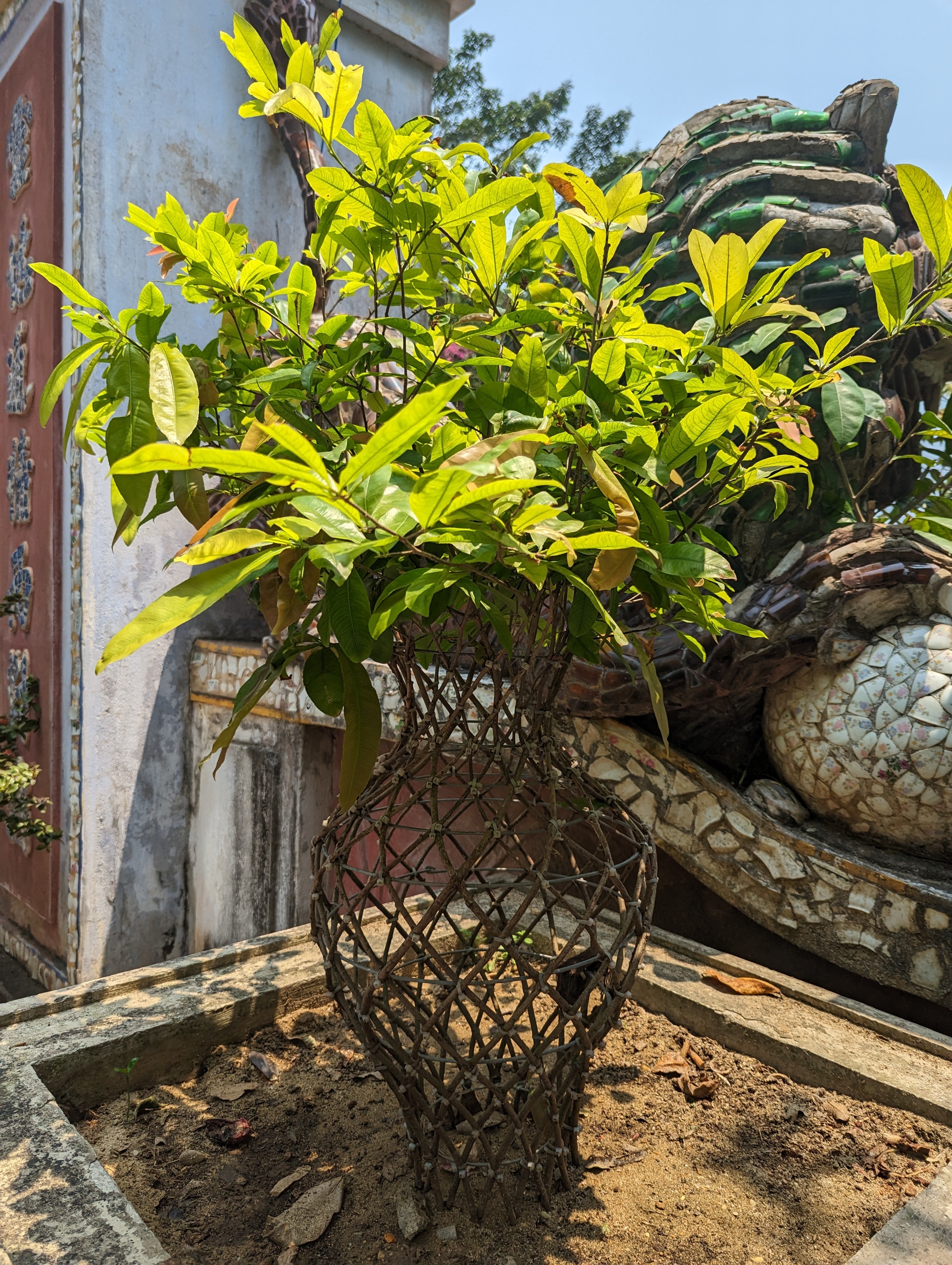

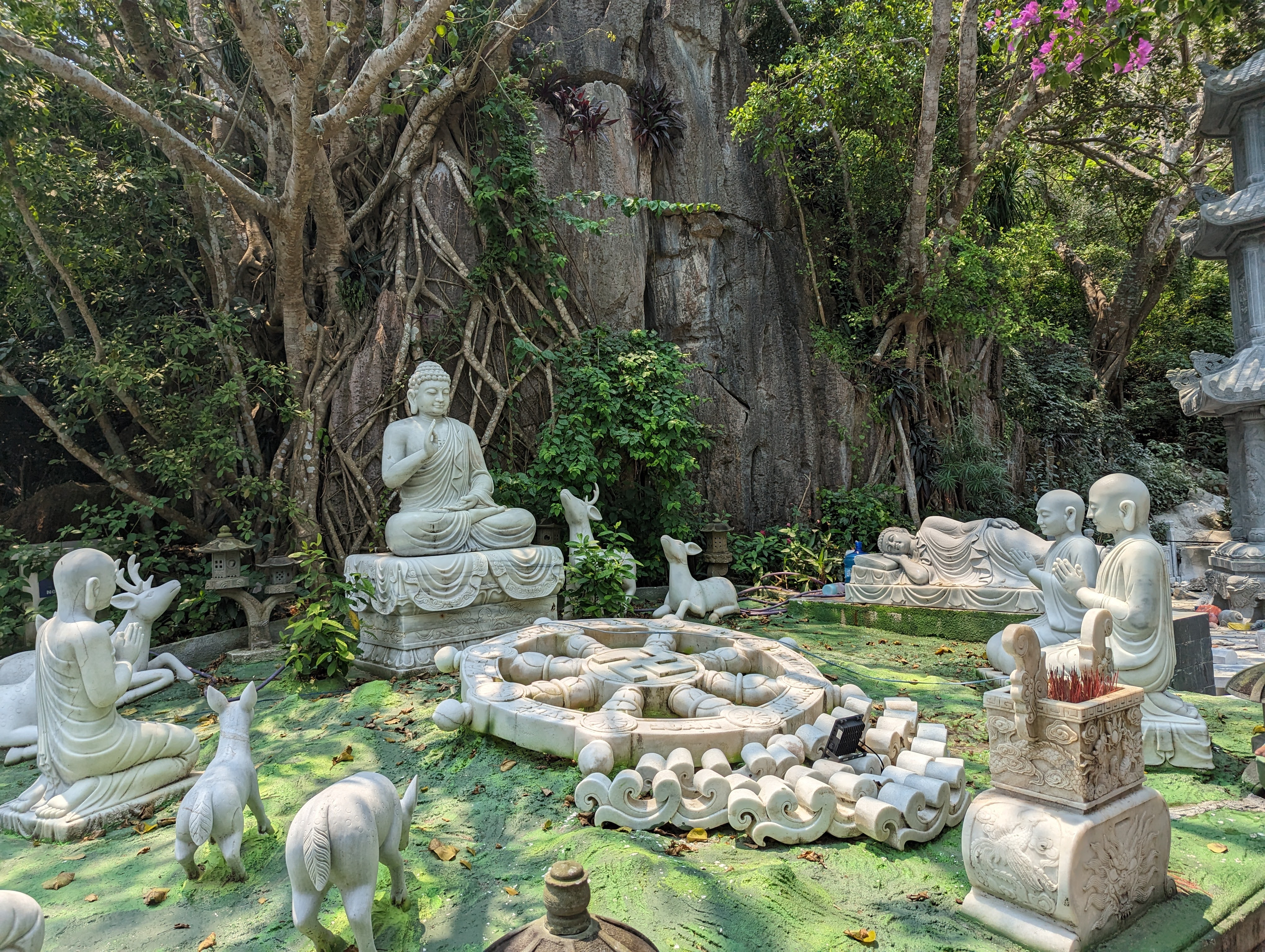


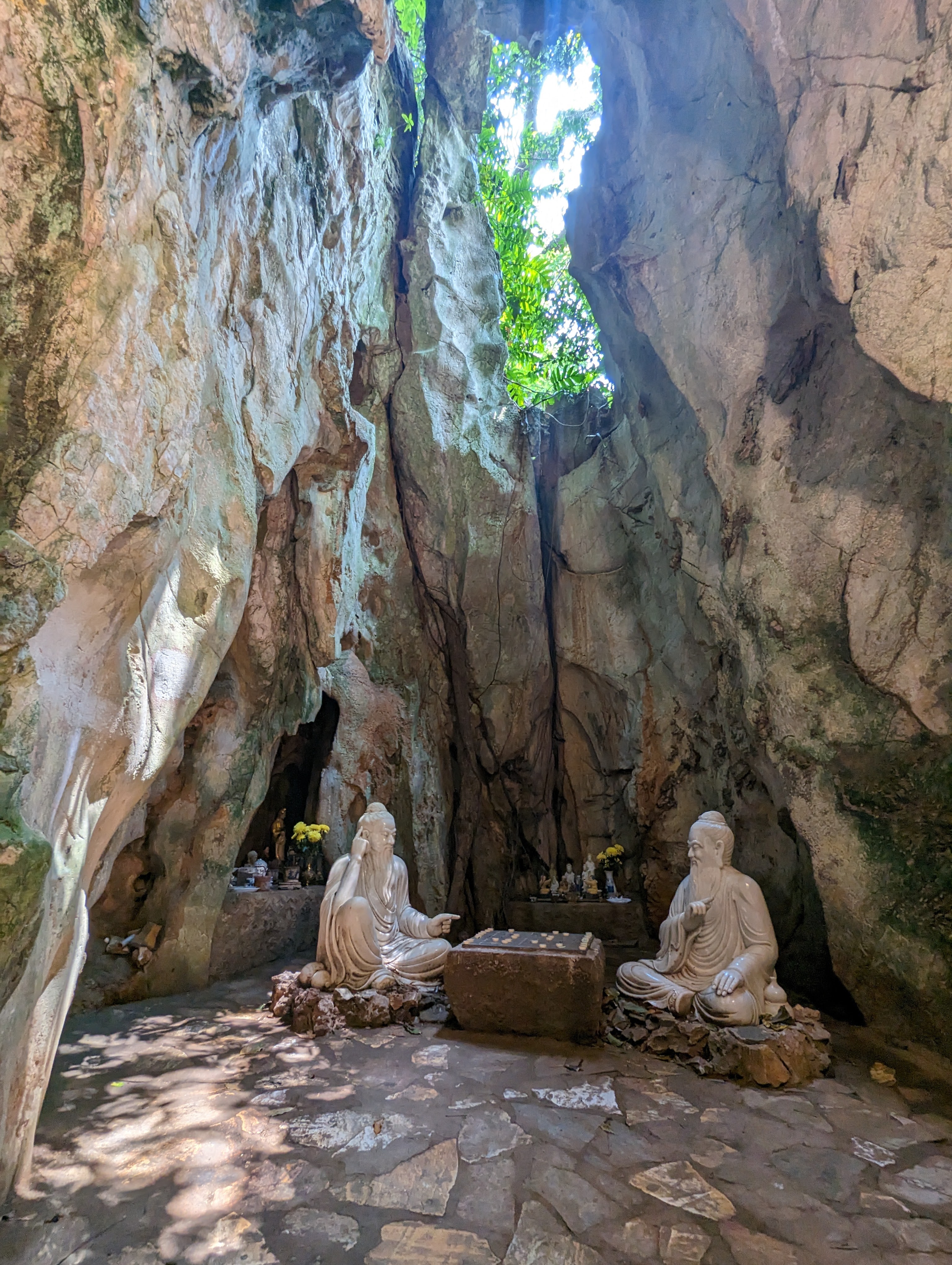
This section is especially impressive, so I capture it with my lopsided, unimpressive skill. The roof of the cave was partially destroyed in a bombing raid during the war, and sunlight illuminates the area.
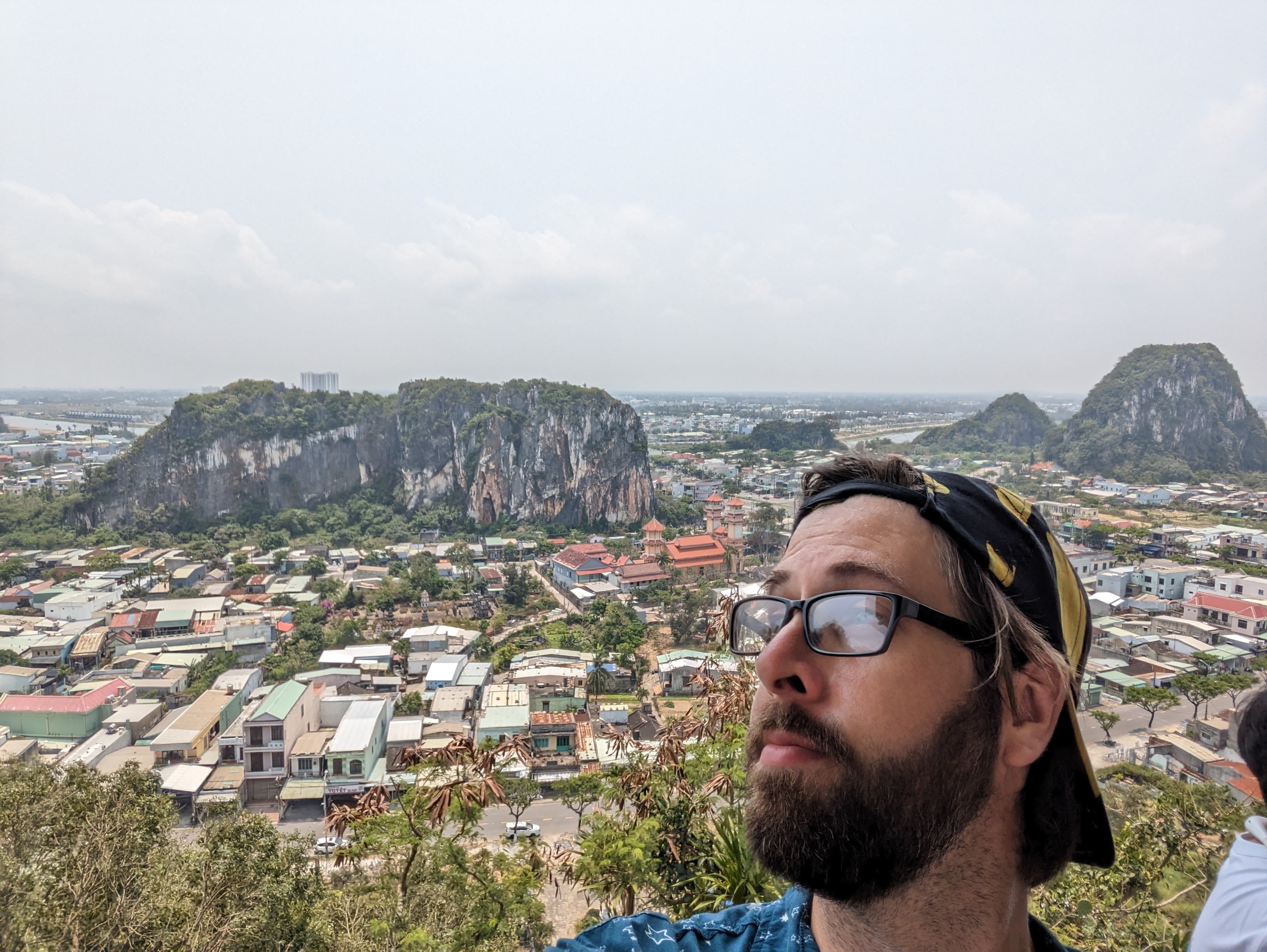
The view from the top of Marble Mountain. It’s fairly impressive, so I decide to spoil it by sticking my awful head in it.
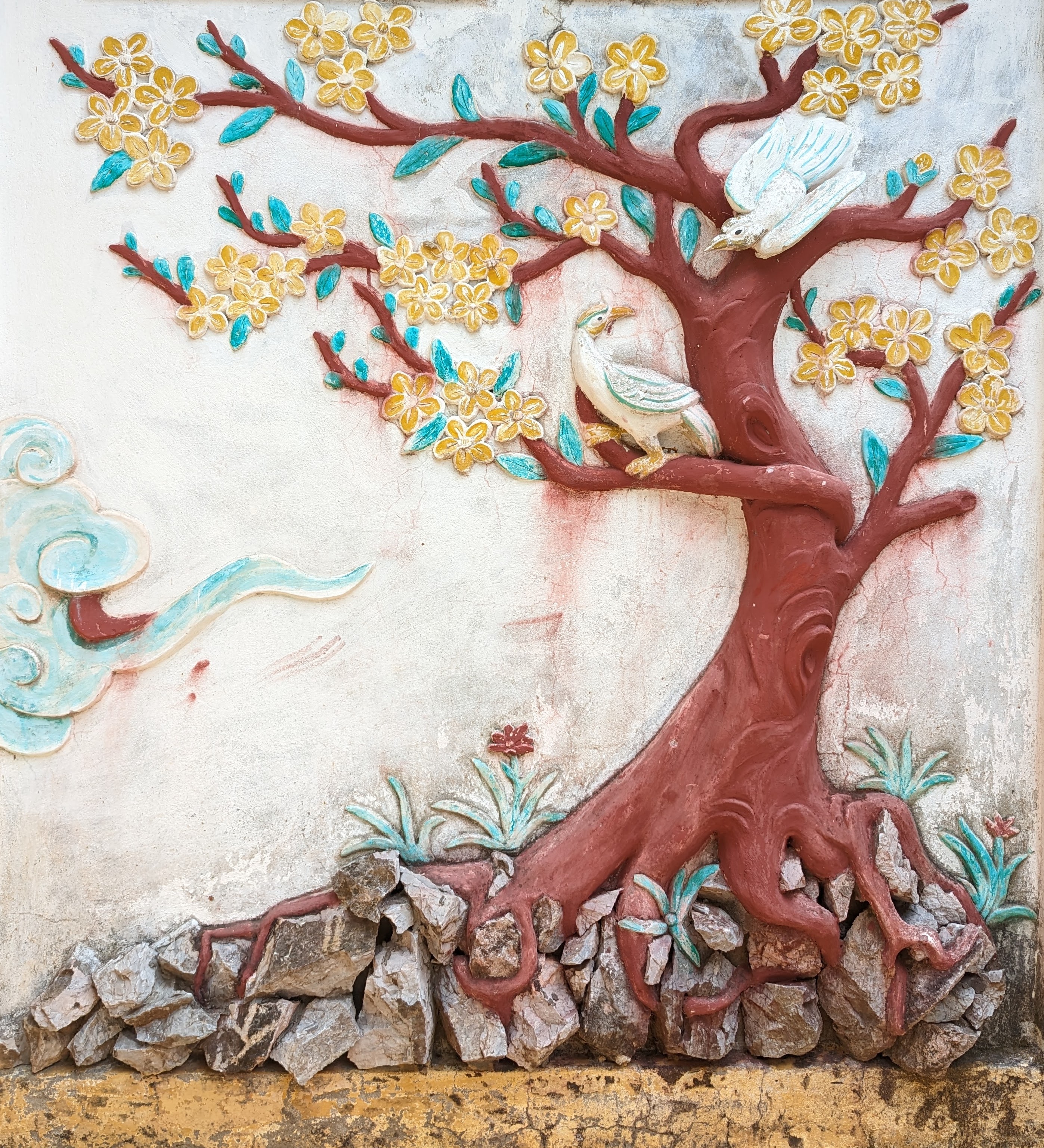
One of the few painted reliefs on the wall of a temple at the mountain’s peak. It has an undeniable charm and the colours shine in the hot spring sun.
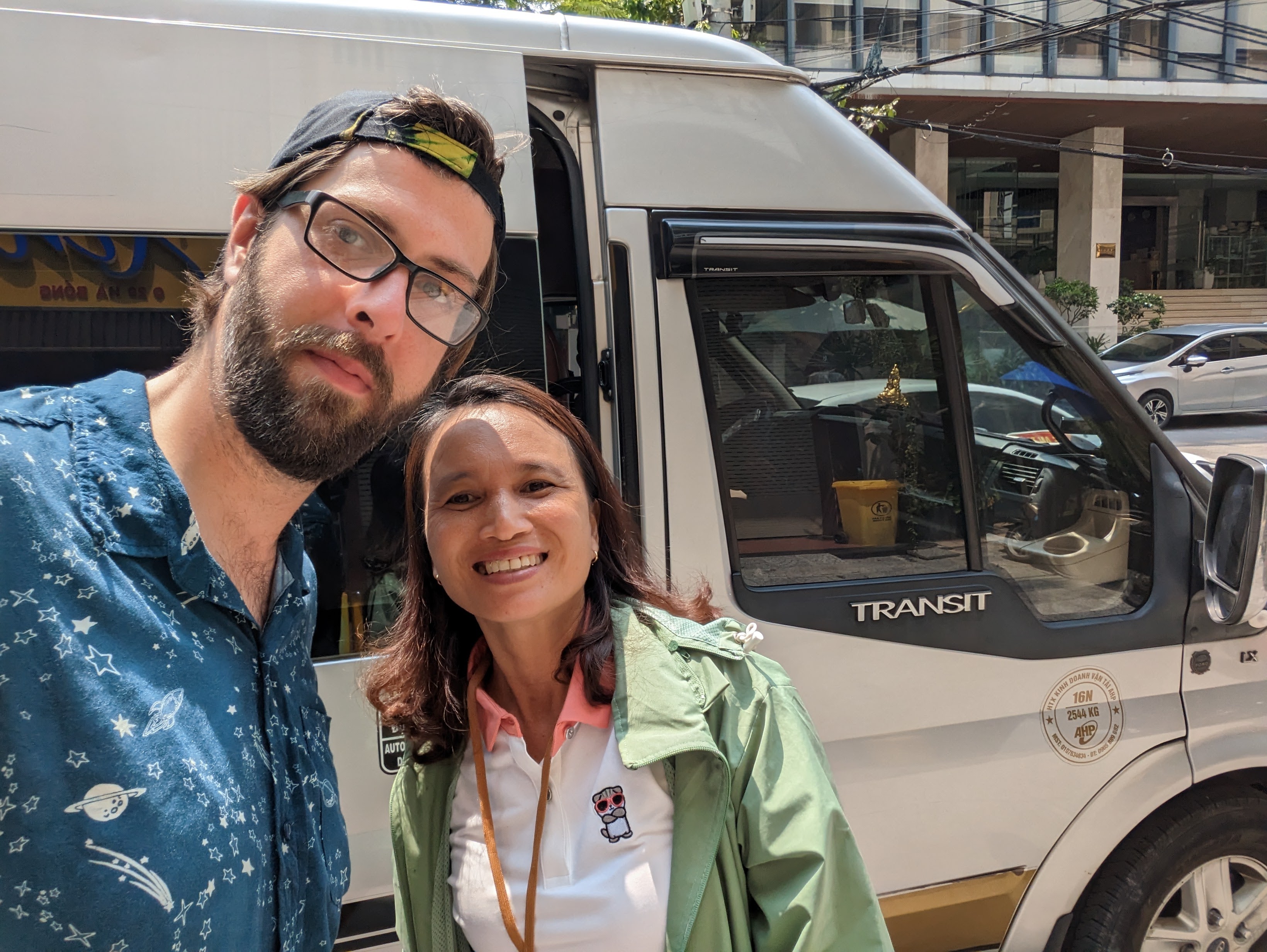
Thank you to Lien from Venustravel – Travel in Viet Nam (venusvietnamtravel.com) for being a great guide and for having tremendous patience as I made my way down the marble steps towards the end of the tour. By the time I make it to the tour bus, half of the group have found, purchased and almost finished ice coffees.

After a brief siesta at the hotel, I decide to make the most of the rest of the day. By this point, around 4pm, the worst of the sun has faded, a layer of cloud has settled and, in the right spots, a cool breeze blows.
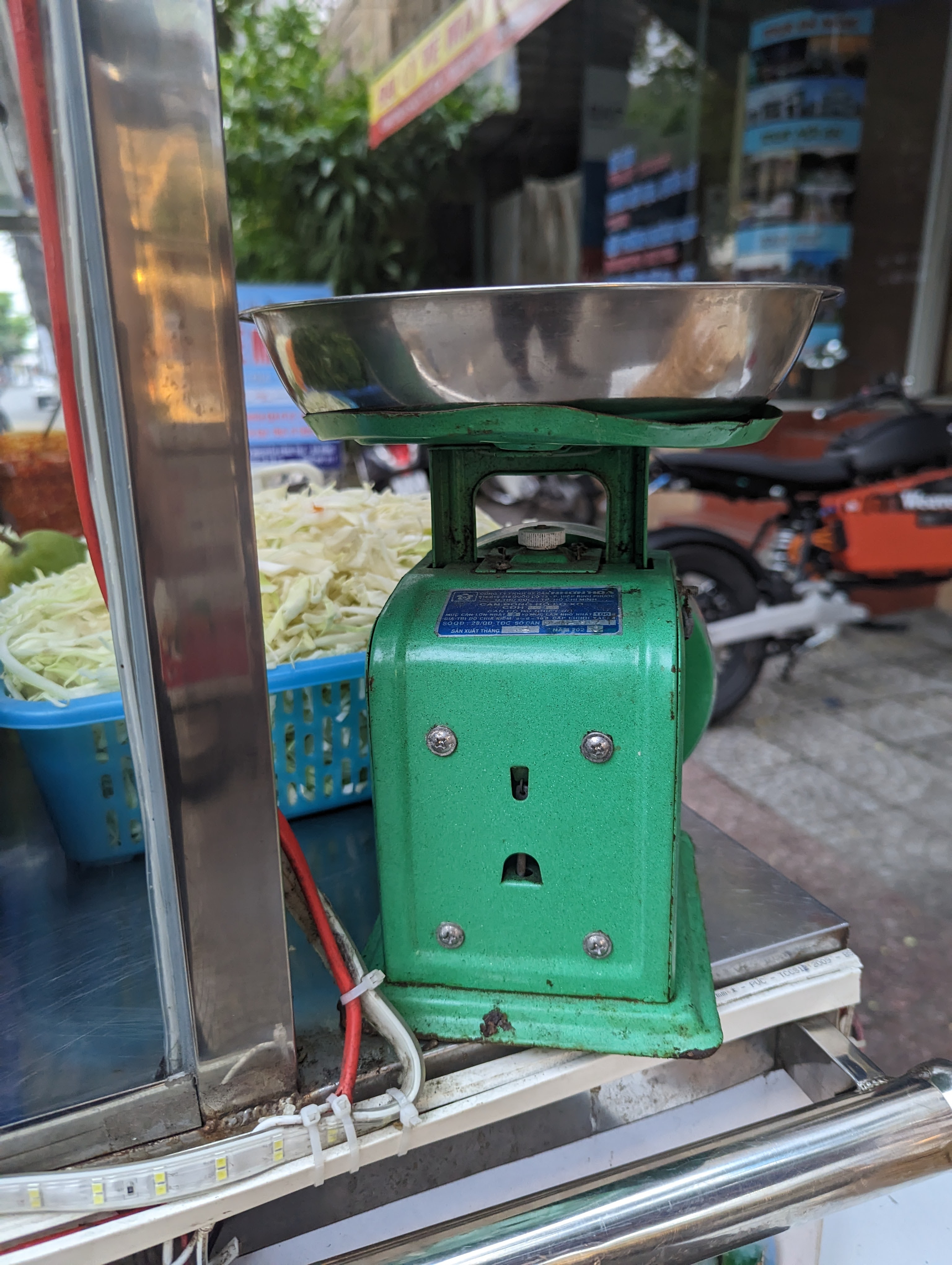
Which is good, because after a full day exposed to the elements, I am starting to feel the same as this poor little guy.
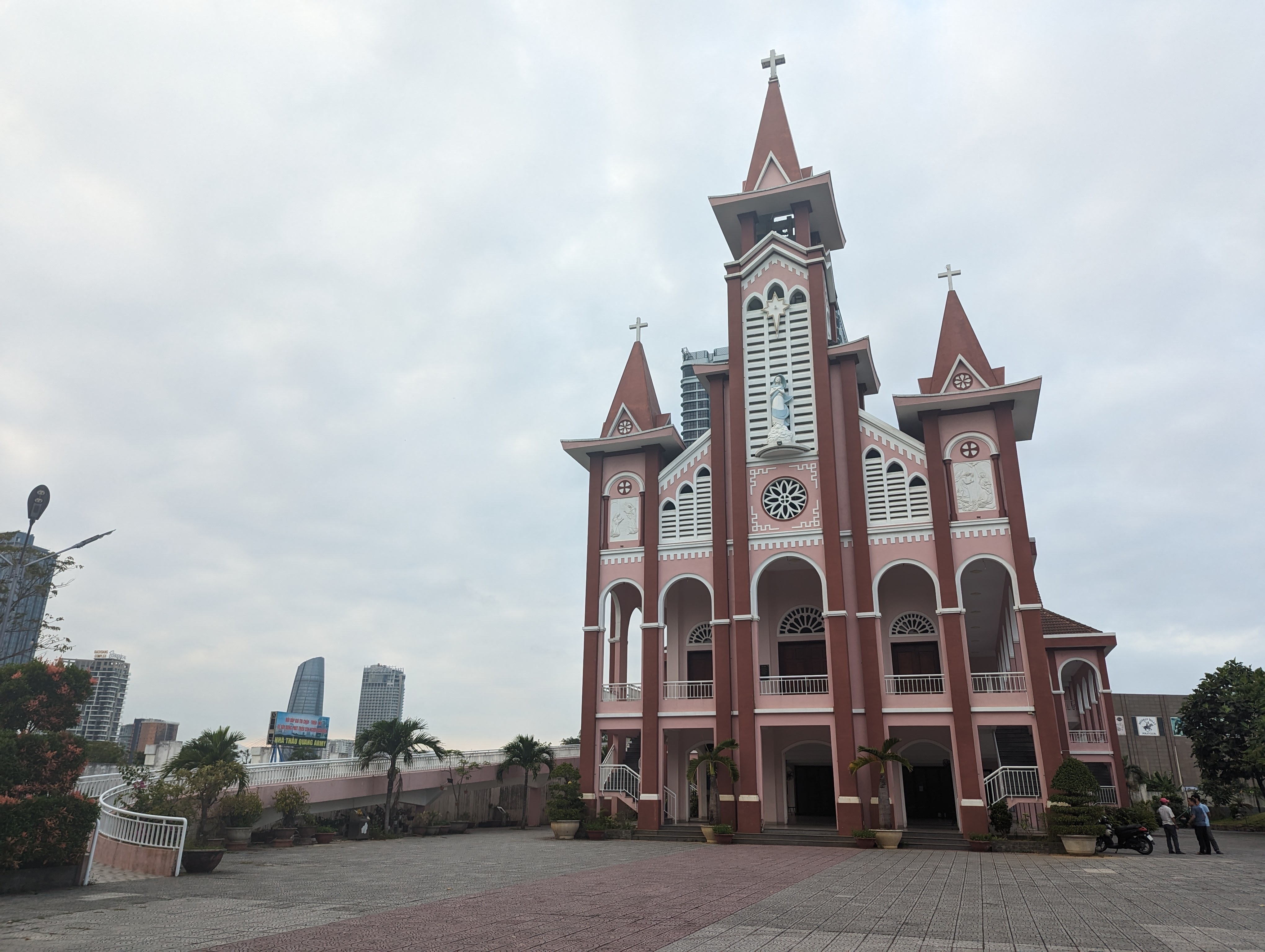
Vietnamese churches have a distinct style. A unique fusion of various European styles, and in the case of Da Nang’s two largest churches, shining pink exteriors.

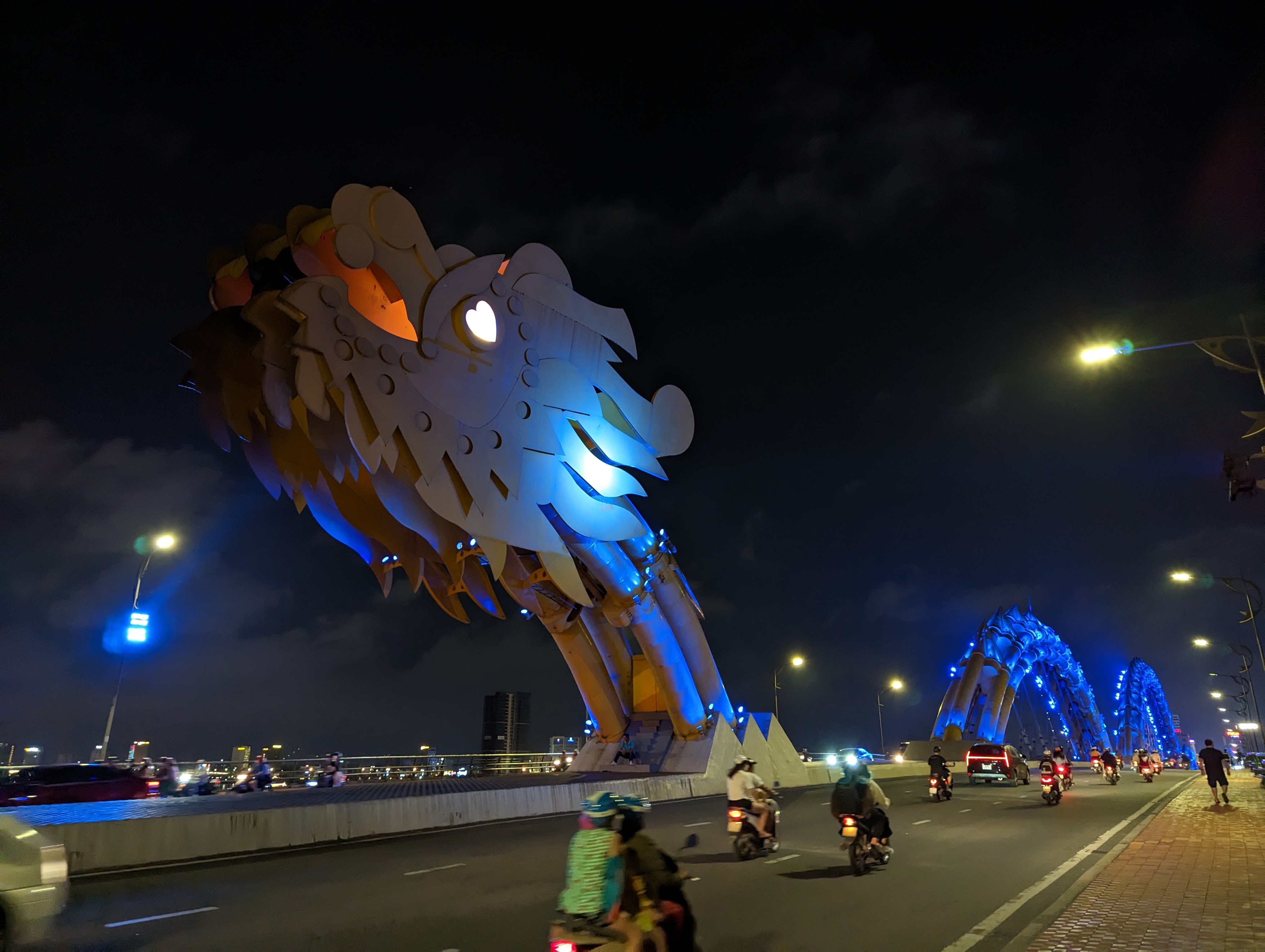
I make it to one of Da Nang’s major tourist spots – Dragon Bridge. Every weekend at 9pm, thousands gather to witness the bridge breathe fire and spit water…
…which is undeniably impressive. Close to the bridge is a night market with two large bars, vendors selling souvenirs, clothing, toys and electronics. Further along are three makeshift streets of stalls with fresh seafood platters, various barbecued meats and a range of deserts. It’s packed, but the atmosphere is good and there’s a jovial, welcoming feel to the whole place. If someone tries to sell you something and you say ‘No, thank you’, they leave you alone immediately, which I appreciate.
I leave this area and walk along the bridge with a view to finding more adventure in central Da Nang city.
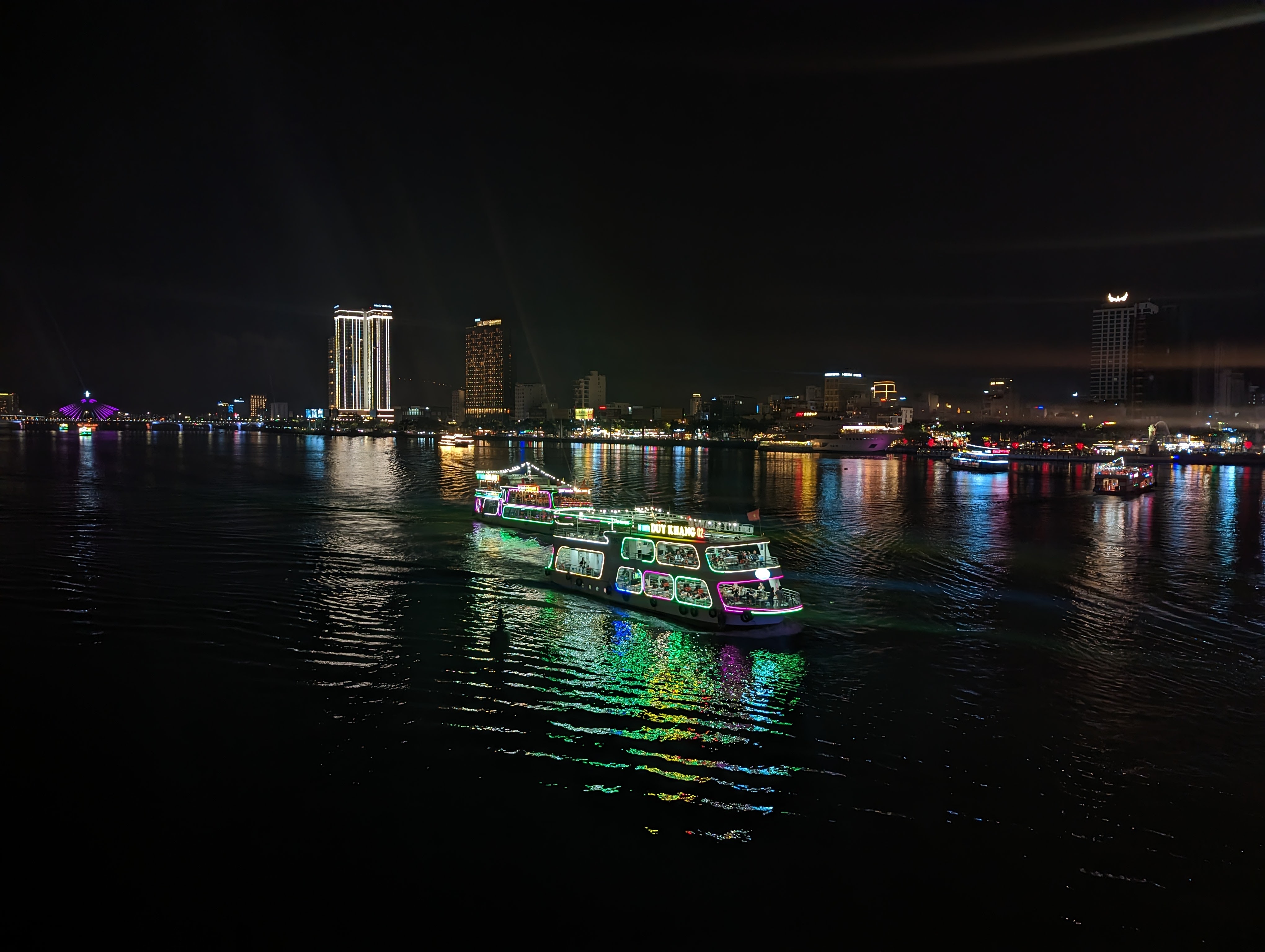
Night cruises slowly crawl along the river and under the bridge.
In central Da Nang city I find a bookshop and a corner coffee shop whose delectable black iced coffee only costs 15k VND (less than 50p). I wander around, nibbling a banh bao (more on those later) and reflect on the day.
At this point my energy begins to wane. I have covered just over 17km on foot today and am feeling like it might be time to retire. I have much to do tomorrow and want to be in peak physical condition (read: ‘relatively peak’). I cross back over the bridge towards the night market, intent on getting an early night.
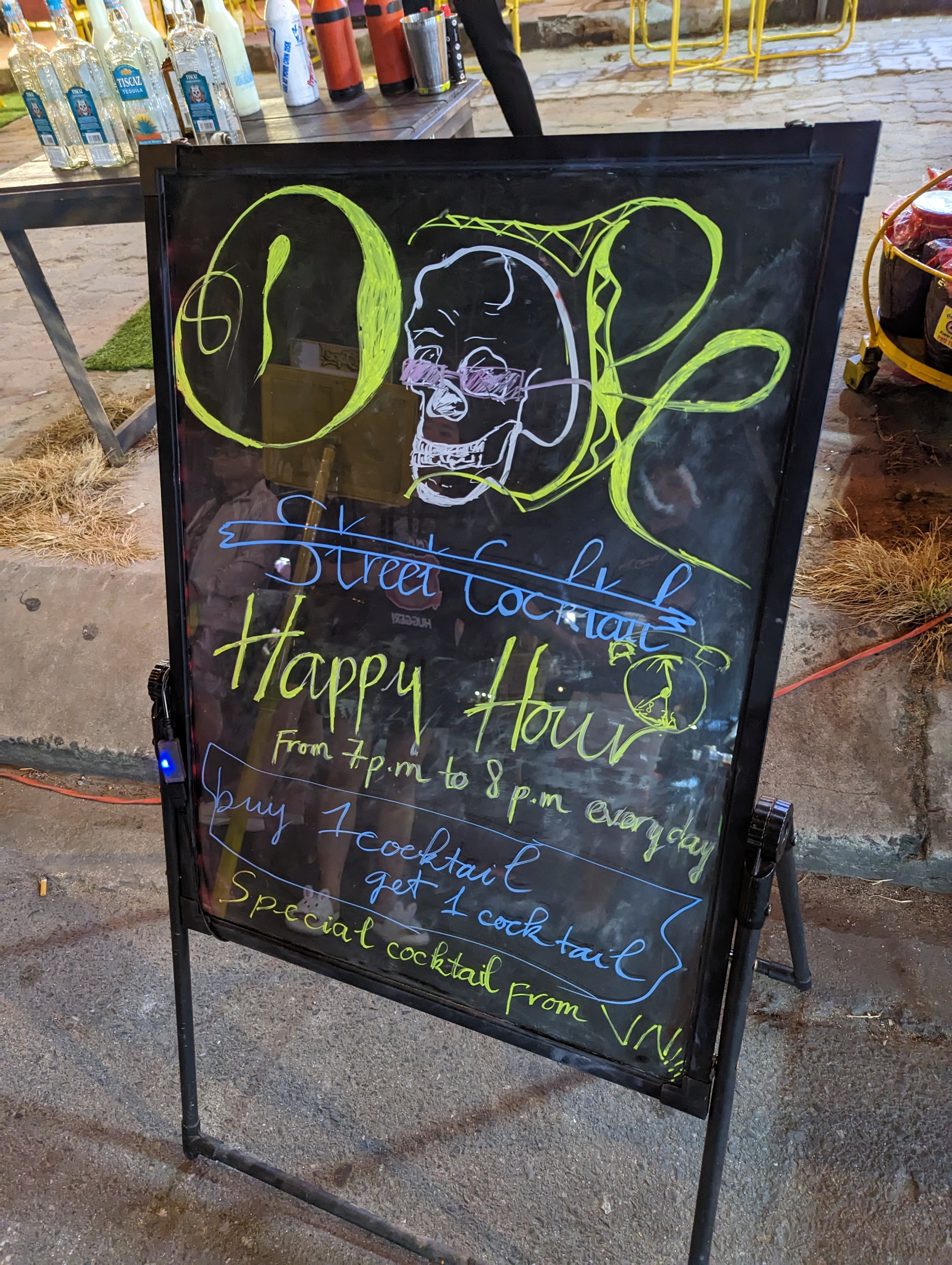
As I teeter along on weakened legs, albeit refreshed by the evening breeze across the river, I stumble across the deal of the decade.
To the top left of the picture, you can see a table full of bar flair props. A young man is rehearsing a routine with the plastic bottles ready for a performance later.
It’s that rare kind of day when you feel like you have been blessed. The winds are behind you, pushing you onwards, and everything falls into place. I sit outside the bar with a cold beer and my book, Haruki Murakami’s ‘Colorless Tsukuru Tazaki’, a reflective and mournful work about loneliness, isolation and feeling distanced from those you love. As I said, everything was falling into place today.
After a few pages and an unsuccessful attempt at conversation with some Australian casino managers, the bar flair juggler returns and put on a show. It’s impressive seeing him perform with the flaming props. He fumbles the balance at the end, but about an hour later he repeats the routine flawlessly.

I finish my beer and decide that it’s time for dinner before heading to bed. A charming elderly couple lure me to their stall with delicious looking marinated pork and chicken. I sit on a traditionally tiny stool at a traditionally weatherworn table on a traditionally serviette and cigarette butt strewn street, and they bring me meat, salad and a beautiful chili and peanut dipping oil. Wrapped in rice paper, these hand-made rolls are the perfect end to a perfect day.
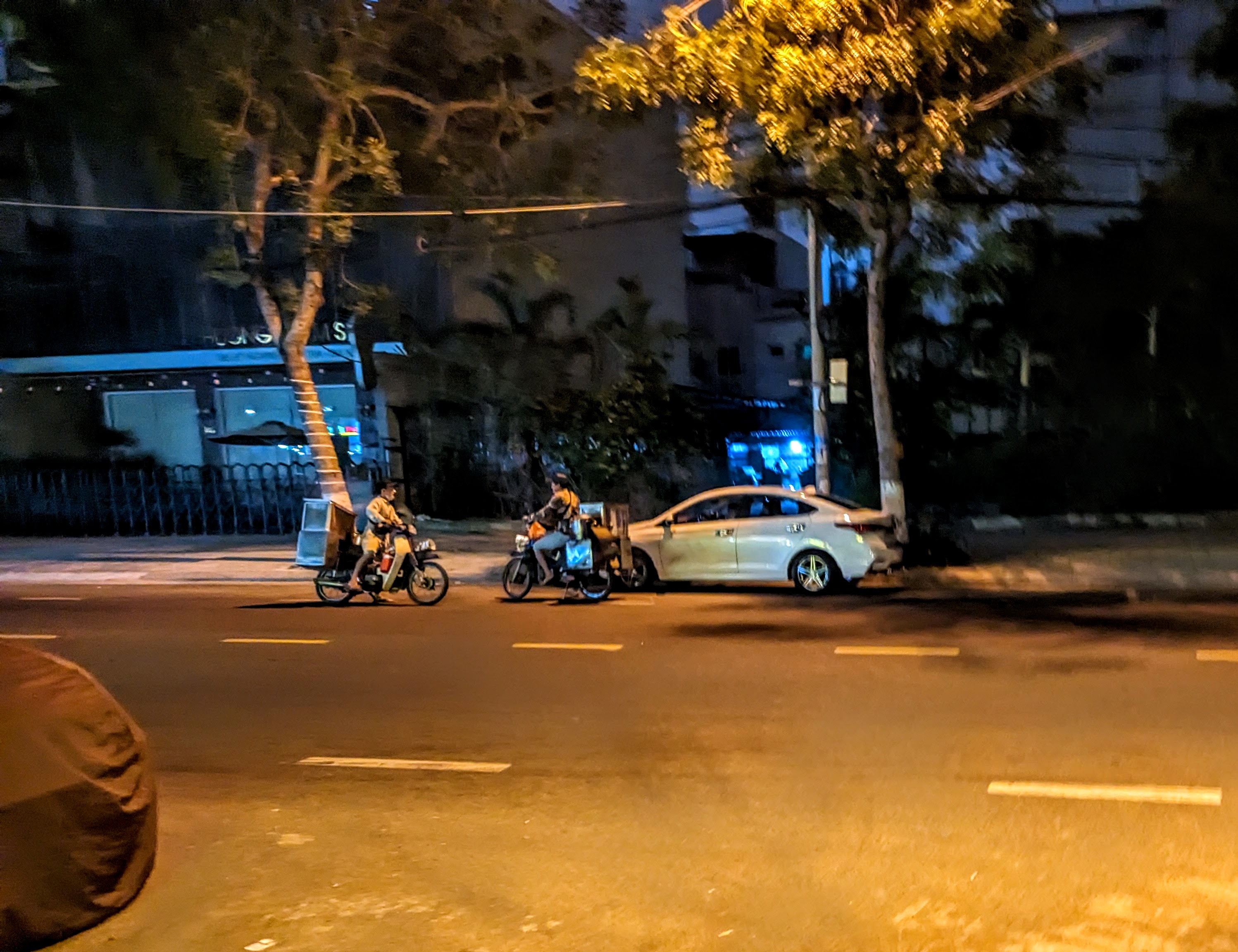
But the day has one more surprise for me. As I amble home, I spy not one, but two Banh Bao guys chatting in the street. Why is this significant? Well, after a short time in Da Nang you get used to hearing the Banh Bao guys pootling down the road with their mobile kitchen-on-a-bikes. And, depending on the time and place, you may choose to exchange 20k VND (around 80p) for a delicious, fresh, steaming hot bao bun filled with pork, vegetables and a quail egg.
Seeing one is fortunate, seeing two interacting is a blessing. Their speakers proudly announce their wares in off-kilter harmony. It’s a looped recording and every banh bao guy has the same. “Banh Bao! Bahn Bao Rai! Bahn Bao Dac Biet!” blasts out along the street. I will get a proper picture of the setup before I leave, but in summary it’s a motorbike with a rear-mounted open wood fire, a large pot full of very hot water, a large metal steaming cabinet and many gently steaming bao buns. It amuses me to consider the reaction you’d get from the police back home if you were found riding one of these around town centre.
I am exercised, fed, watered and overall feeling wholesome and well. It truly was a gift of a day and I feel grateful to have been able to have these experiences. I tuck myself into bed before midnight and prepare for Saturday and the delights the rest of the weekend will bring.
 Max Lawrence Writes